What’s Your Mahavakya
Mahavakyas: The Great Sayings The Spark Awakening
Is it possible for a few simple words to crack your mind open and make a lasting difference?
Is it possible for a few simple words to crack your mind open and make a lasting difference? To actually be enough to create a turning point that leads to a genuine breakthrough in your spiritual journey?
The answer is yes, and that's what I want to talk about in this first episode of my new series of short teachings, Seeds of Awakening.
I’m Mindo, and this is my school: Stop the Mind Meditation.
The courses on my website — the initial, further, and advanced steps of meditation — focus on the how: techniques that make meditation truly profound by moving toward stopping the mind.
These podcasts and newsletters are about the why:
Why stop the mind?
Why is that aim different from simply becoming calm or relaxed?
Why do I teach a method of meditation that is so different than the mindfulness or effortless approaches so many others offer these days?
Later in this series, I’ll also be offering a number of short tips to help you become a great meditator — whatever style of meditation you practice.
I’ve been meditating since 1970 and was trained to teach meditation not long after that. What I share now though is very different from those early days, but my love for teaching — and for meditation itself — has only grown more passionate.
So let's talk now about Seeds of Awakening.
Because that’s what growth requires: tiny sparks of insight that land.
Do those seeds come from outside? Not ultimately. That’s the conundrum - that's the mystery.
We get the ideas, the nudges, the encouragements from our teachers.
And yet, no part of real progress comes from teachers or scriptures. It all must arise from our own moments of illumination — our “aha” recognitions that accumulate into transformation. You could say we aha ourselves awake.
So, do teachers have value? Absolutely — because sometimes a single phrase jars us into seeing differently, and that is what sparks the aha.
Whenever I sat with my teachers, I listened for those turns of phrase — the hidden Easter eggs in their words - those seeds that shook my recognition.
My entire teaching — Stop the Mind — came from one such seed.
For years my teacher, Mark would say “Stop the mind.” Then one day, he said it just differently enough that it pierced through my brain and lit. Suddenly, I heard it. Like a bubble breaking the surface — POP – everything I’d learned snapped into place, and a cascade of realizations followed.
I’ll save talking about why stopping the mind is so crucial. For today, I just want you to encourage you to start watching for your own seeds. They’re the real catalysts of progress. When one appears — write it down. Record it. Keep a “Seeds of Awakening” journal or a note on your phone or desktop.
Don’t let those sparks fade. Even a momentary ring of recognition is a seed meant for you. It may sprout in a week, a year, or a decade — but when it does, it changes everything. Each seed has the potential to be a turning point — if you hold on to it.
Can I help you find more seeds? I hope so. And I believe I can — because I tend to say things just a little differently. And sometimes, that difference is all it takes for a bubble to surface. Also because I use a lot of visuals in my approach to teaching, and sometimes that visual element carries a message to the parts of the brain that think visually in ways that words alone don't touch.
I first learned the power of words like this in the 1970s, sitting in a hall in Switzerland with Maharishi Mahesh Yogi and other advanced teachers of Transcendental Meditation. He spoke of a Sanskrit term: Mahavakya.
Mahā means “great,” and vākya means “utterance.” These are the “great sayings” — phrases so potent that, if heard at the right moment, they can ignite enlightenment itself.
Maharishi explained the four classic Mahavakyas, each pointing to the same truth: our awareness and universal consciousness are one. In these great sayings, universal consciousness is given the name Brahman, or simply That. They are:
1. I Am That (Tat Tvam Asi)
2. Consciousness is Brahman (Prajñānam Brahman)
3. I Am Brahman (Aham Brahmāsmi)
4. The Self is Brahman (Ayam Ātmā Brahman)
The Four Classic Mahavakyas
The first:
I Am That
Meaning, I am that universal consciousness (Tat Tvam Asi).
The second:
Consciousness is Brahman
Meaning, my consciousness is the same as universal consciousness, (Prajñanam Brahman)
The third:
I Am Brahman
Meaning, I am universal consciousness. (Aham Brahmaasmi)
The fourth:
The Self is Brahman
Meaning, my own self is universal consciousness (Ayam Atma Brahman)
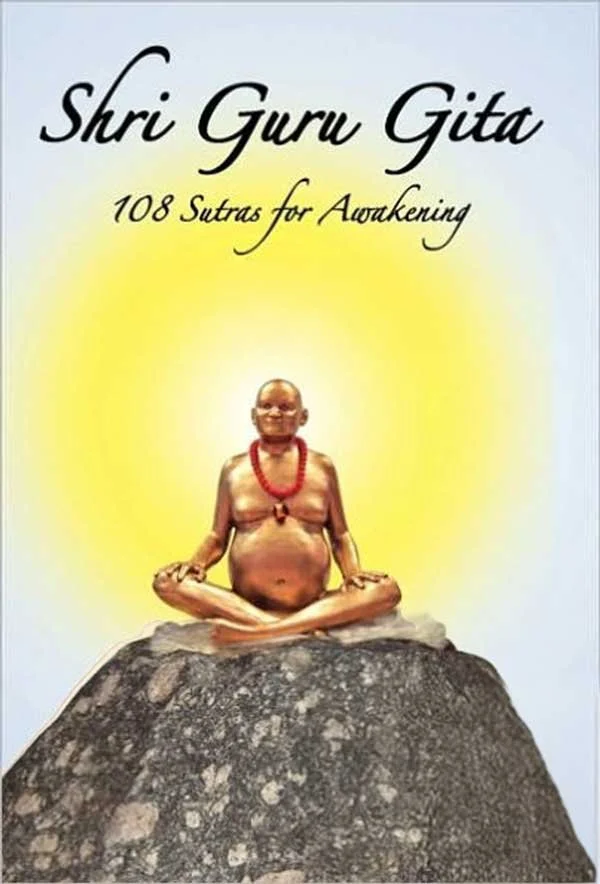
Shri Guru Gita (PodPublishing, 2008)
This revelation about the power of hearing the right words at the right time struck me as so important that - several years ago when my partner and I wrote a fresh translation of the ancient text Shri Guru Gita, to give to our teacher, Mark - we took the verse that in most translations simply mentioned " the crest-jewels (mahavakyas — the great Upanishadic statements" and instead we spelled each mahavakyas out in its glorious fullness, so each time somebody recited the Guru Gita they had the opportunity to have these great sayings come alive for them for those moments.
PRACTICUM
Each episode of this series, I hope to leave you with a practice, such as this discussion so naturally suggests:
Take the Mahavakya — I Am That — and let it quietly percolate throughout your day. Think of it as often as you can. Those three words hold immense power. Someday, near or far, they will break open inside you, and the meaning will flood your awareness like an explosion.
I invite you to subscribe to the Seeds of Awakening podcast or newsletter for future episodes — and explore the meditation programs at Stop the Mind Meditation.
I invite you to subscribe to the podcast Seeds of Awakening or subscribe to my newsletter to get these episodes in print , and come take a look at the meditation program I offer.